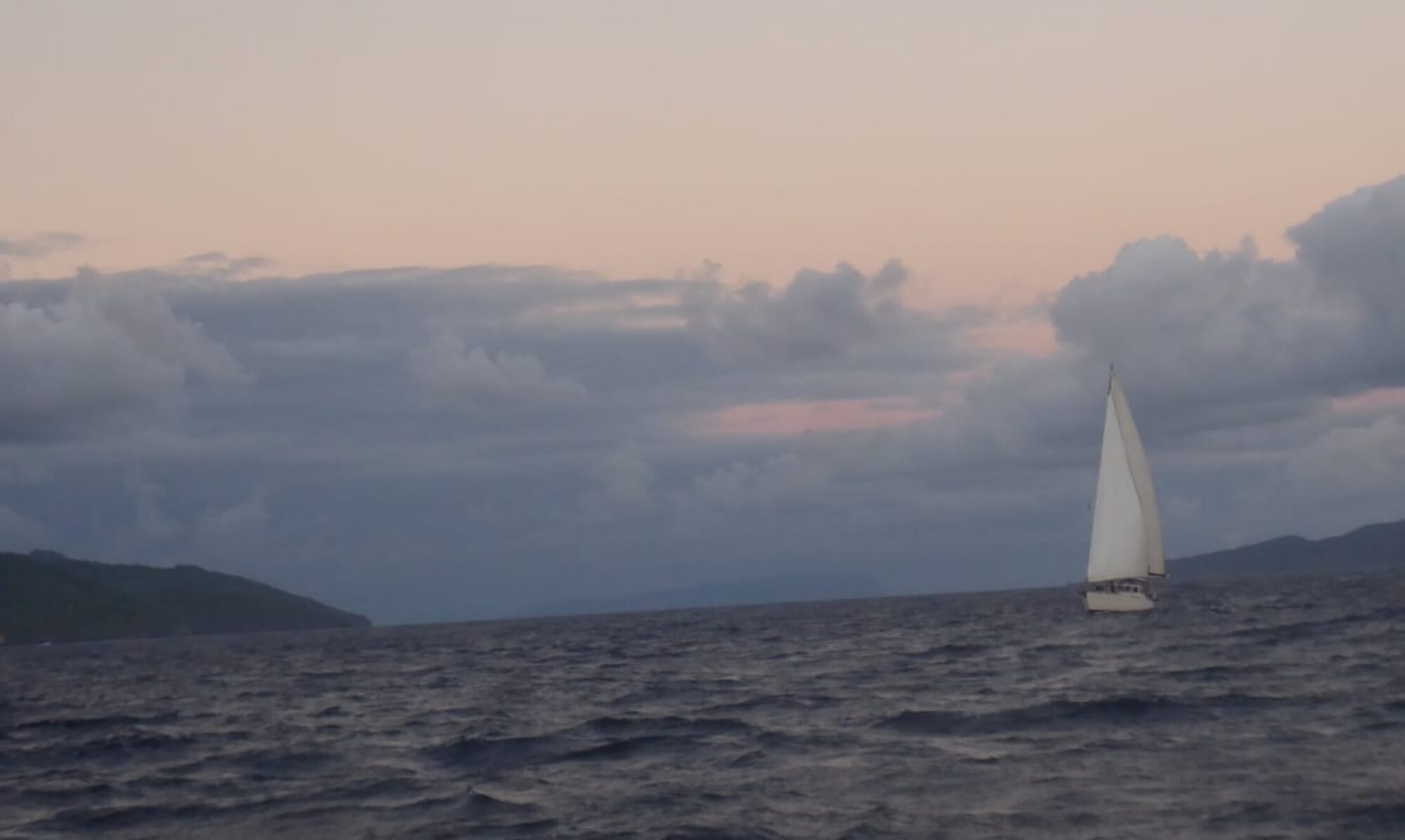


Hello again, and welcome back to our blog. Last time we told you about a visit from our eldest Son Ethan and his partner Becky. This time we will take you on a trip to the state of Victoria in Australia. the Gold Rush, Ship wrecks and Bells Beach!
The main reason that we had to make a side trip to Australia was to reset our New Zealand Tourist Visa. NZ very generously give us Brits 6 months to explore this wonderful country, but, our time was soon to be up since our return here in August last year. We needed to stay longer to align with our plans to sail back to the South Pacific Islands. Right now, in that part of the world it’s Cyclone season and not recommended for sailing. We have certainly seen our own fair share of Cyclones heading to New Zealand this summer too, there’s no way we would want to be caught in one of those on a small pacific atoll with no where to hide.
So, when deciding where to go for our little holiday to reset the visa, Australia was the obvious and nearest choice to New Zealand, only 1200 miles to Sydney, or in our case 1500 miles to Melbourne. Some of you may know that I am a bit obsessed with the history of mining and in particular gold mining, having a long time ago myself worked in the South African Gold Mines, at the tender age of 18. Its one of the reasons I have plans to sail Azimuth all the way back across the Pacific to Alaska and British Columbia. So, I saw this little side trip as a chance to visit the historic gold fields of Victoria to gain some perspective on the gold rush that happened there in the 1850s and beyond.
After our sad goodbyes to Ethan and Becky, we had a couple of days to prepare before we caught the bus down to Christchurch (6 hours!) and to stay in an airport hotel before catching an early flight to Melbourne the next morning. The weather in NZ had been pretty dull for a few days, rainy and not particularly warm, but that was a sharp contrast to what awaited us in Melbourne on arrival. We arrived at about 7 in the morning (2 hours time difference to NZ) and stepped out of the air conditioned airport to find the shuttle bus to the car hire place in to 25 degree heat. Not so bad I hear you say, well an hour later we got in to the car the temperature was about 30 degrees? What’s the problem with that I hear you say? By the time we arrived at the Victorian Gold Mining town of Ballarat, some 2 hours drive later and checked in to our motel, the temperature had reached a scorching 46 degrees! That kind of heat is so intense, your body does not want you to stand in the direct sunlight for very long.
We took a wander around the centre of Ballarat and found the visitors centre, a café and the very popular ice cream parlour, but the heat was just too intense, and so we retreated to the air conditioned motel for the afternoon. I should add that Ailsa was suffering from a cold picked up at the end of our road trip with Ethan and Becky that was relatively short lived and sharp in effect. I started to come down with the same cold on arrival at Ballarat … damn!
Ballarat became one of the richest goldfields in the world after gold was discovered in 1851. The Victorian gold rush drew huge numbers of miners from across Europe, North America, and China, rapidly transforming the colony’s population and economy. Life on the diggings was harsh: miners worked alluvial deposits with simple tools, lived in rough camps, and faced unpredictable yields.
A major source of tension was the mining licence system. Miners were required to pay high fees regardless of whether they found gold, and the colonial government enforced the system aggressively through police “licence hunts.” This created deep resentment and a growing sense of injustice.
By late 1854, Ballarat miners were increasingly frustrated by expensive mining licences, taxation without representation, corruption and heavy‑handed policing and a lack of political rights. These grievances culminated in mass meetings at Bakery Hill, where miners formed the Ballarat Reform League and raised the Southern Cross flag for the first time on 29 November 1854. They swore the famous diggers’ oath to stand by each other and defend their rights.
Things came to a head with the Eureka Stockade on the 3rd December, 1854 when miners constructed a makeshift defensive fortification—the Eureka Stockade—on the Eureka diggings. In the early hours of 3 December 1854, government troops and police launched a surprise attack while the stockade was lightly defended killing around 22 miners and 5 soldiers. With the rebellion crushed, 13 miners were later tried for high treason but were all acquitted.
The Eureka Rebellion is widely seen as a turning point in Australian democracy. Its aftermath led to the abolition of the mining licence, the introduction of a fairer miner’s rights and new voting rights for citizens. The Eureka flag and the events at Ballarat remain powerful symbols of resistance, fairness, and the struggle for democratic rights in Australia.
Back to our tour then, the next day the temperature had thankfully dropped to a more reasonable 30 degrees, and we headed for a visit to the wonderful Sovereign Hill, a recreation of a 1855 Gold mining town complete with dirt high street lined with shops, hotels and bars, actors in costume, parading British soldiers in Red coats, two gold mines one with a preserved processing plant, headgear, machine house, gold panning and a host of other interesting exhibitions. That took most of the day to visit, as I struggled with my take on Ailsa’s cold! We watched a fascinating demonstration of cheese making. We watched the red coats fire the guns. We saw the horse and carriage tour. We went underground on a little tour where one of Victoria’s largest gold nuggets was discovered, it was all around heaven for gold rush history enthusiasts!


The next day we headed towards the second mining town of our visit, the most prolific producer of gold during the rush, the town of Bendigo. On the way we stopped at another well preserved Victorian mining town of Clunes.
Gold first surfaced on a Scottish settler and farmer, Donald Cameron’s farm in 1850. He tried to keep it quiet, but when James Esmond struck payable gold in 1851, Cameron’s sheep farm became the birthplace of Victoria’s gold industry. The town that formed on his land took the name of his Scottish birthplace, Clunes. Because the area lacked easy alluvial gold, Clunes quickly evolved into a centre of deep‑lead and quartz‑reef mining, attracting organised companies rather than gold rush prospectors. Today, Clunes still has an intact gold‑era streetscape including the grand Town Hall, churches, the School of Mines, and the 1860s–70s commercial buildings lining its main street, Fraser Street


We visited the fascinating Clunes Museum, housed in the historic former warehouse on Fraser Street, telling the story of Cameron’s sheep farming, the first gold discovery, and the rise of company mining, lots of artifacts and displays of Victorian life from that time period.
Another hours drive through the dry and arid, but rather beautiful wide open farming plains of this area and we arrived in the town of Bendigo to stay for 2 nights right in the centre of town at the historic Shamrock Hotel, which at one time must have been rather grand, but now was looking a little worn round the edges!
The Shamrock Hotel in Bendigo, founded in 1854 and rebuilt into its grand Victorian form by 1897, became the city’s gold‑rush showpiece and even hosted Prince Charles and Princess Diana during their 1983 visit! There is a plaque on the wall tucked away in the Lobby. We speculated whether we were staying in the same suite as Charles and Diana on our visit, but given that we paid 75 quid a night, we suspected probably not?!


Bendigo’s gold story begins in 1851, when Margaret Kennedy discovered alluvial gold in Bendigo Creek. Within months the quiet farming district exploded into one of the richest goldfields on earth. By Christmas 1851 there were 800 diggers, and by mid‑1852 more than 20,000 miners had arrived from across the world.
The early years were dominated by alluvial mining—panning, cradling, and shallow sinking along the creek and gullies. Bendigo quickly earned a reputation for extraordinary yields, eventually producing more than 700,000 kg of gold between 1851 and 1954. Lets put that in context at todays gold price, that amount of gold would be worth 85 billion pounds!
As the surface gold dwindled, miners turned to deep‑lead and quartz‑reef mining, sinking shafts hundreds of metres below the city. This industrial phase reshaped Bendigo where large mining companies replaced individual miners. Heavy machinery, crushing batteries, and steam engines became standard and the city above grew wealthy, with grand boulevards and public buildings funded by gold profits. By the early 20th century, Bendigo’s mining landscape was a maze of deep shafts and tunnels beneath the streets.
It got hot again on our arrival in Bendigo, with the temperature climbing up in the early 40’s, so we didn’t venture out to explore the town until the early evening when we found took a stroll around the huge park in the centre of town next to the hotel and found a nice Thai restaurant for dinner.


The next day, I booked us on a tour of the Central Deborah Gold mine. This mine was one of the last major mines to operate in Bendigo. It opened in 1939, long after the original rush, worked 17 levels underground and produced 929 kg of gold before closing in 1954. This mine became one of the final chapters of Bendigo’s 100‑year mining era. Today it survives as an intact, authentic mine where visitors descend into the original tunnels.


Although it was still hot, it was well worth the visit. All the surface buildings are still intact, the headgear (locally known as the poppet head) the stamper and processing mill, where we hand a turn at gold panning. There was a little museum to visit too. The temperature underground was a lovely cool 15 degrees, and we did the tour with just 2 other people, which was very interesting, visiting one of the upper levels and seeing the shaft, the tunnels, a demonstration of drilling with compressed air drills, just like the type I used to use! As well as some quartz reef with rare physical gold showing. All in all a very enjoyable experience.
In true Pearce style, we had only booked 4 nights of our 8 night break in Australia, so whilst in Bendigo, we managed to find some internet and work out what to do for the remainder of our trip. We are not city people, so a visit to Melbourne was not of interest, the other options in Victoria were a visit to the alpine mountains, a cruise down a river (too expensive!) or a drive down Victoria’s Southern Ocean coastline. Well, being sailors, of course we were drawn to the ocean! A 4 hour drive through the baked bush and scrub land of Victoria found us on the Coast and staying the first night in the uninspiring town of Warnambool. We found ourselves in a locals pub that evening for dinner that was very vibrant. Everyone was complaining about the cold weather?! What a contrast for us, We left Bendigo in 40 degree heat to arrive on the coast after a 4 hour drive to 15 degrees!
The next day we were drawn by tails of shipwrecks and maritime history to the excellent Maritime Heritage Village, another excellent recreation of a Victorian maritime coastal village complete with museum where we were to be immersed for several hours in the history of the shipwreck of the Loch Ard, a sailing ship built in Glasgow that met its doom on this coast with only 2 survivors.
In June 1878, the iron clipper Loch Ard was nearing the end of a long voyage from England to Melbourne when it struck the cliffs near Mutton Bird Island on Victoria’s notorious Shipwreck Coast. Heavy fog, rough seas, and the treacherous coastline left the crew with almost no warning before the ship smashed onto the rocks. Of the 54 people on board, only two survived, Tom Pearce, an apprentice sailor, and Eva Carmichael, a young Irish passenger. In a dramatic rescue, Tom swam through the surf to pull Eva to safety. (way to go Pearce’s!)
The museum tells the story of the tragedy and shows the artefacts recovered, including the Loch Ard Peacock, a Minton ceramic sculpture destined for the 1880 Melbourne International Exhibition that survived the wreck intact.


The museum also had a theatre where they were showing this film that I managed to find on YouTube. It had us transfixed for the full 45 minutes, and is worth the watch if you want to know what it would be like to round Cape Horn in a violent storm in a huge sailing ship, filmed and narrated by one of the crew. Ailsa decided from this that she doesn’t want us going anywhere near Cape Horn in Azimuth!
The rest of our time was taken up exploring the stores, light houses, bond warehouses, chandeliers, riggers and other fascinating places in the replica village.


From Warnambool we headed down the Coastal Road, known as the Shipwreck Coast, stopping a couple of nights at another seaside place called Apollo Bay. Its an interesting drive, with plenty to see along the way. Here’s some general pictures taken along the way


We stopped to see where the Loch Ard met her doom. Easy to see why only 2 people survived these rocks! I think we had about 30 knots of wind blowing on a lee shore the day we visited, an awe inspiring place.


We visited the Twelve Apostles and fought our way through the crowds of Chinese tourists that flocked to see this coastal display too. The Twelve Apostles began as thick limestone cliffs laid down millions of years ago when the region was covered by a shallow sea. Over time, relentless Southern Ocean waves carved cracks into the rock, slowly hollowing them into caves and then arches. When those arches collapsed, they left behind isolated pillars standing out in the surf. The same forces continue today, meaning old stacks fall and new ones gradually emerge. The force of the wind and the big seas made this even more dramatic on the day we visited.


Another of the highlights of the coast was a visit to the world famous surfing mecca called Bells Beach. The waves were huge! There must have been a 100 surfers out on the two sides of the beach surfing the breaks right against the rocks. Now one of the reasons that this beach is significant to Ailsa and I is that we are avid fans of the film Point Break starring Keanu Reeves (playing Johnny Utah) and Patrick Swayze (playing Bodhi).
At the end of Point Break, Johnny Utah finally corners Bodhi on the windswept sands of Bells Beach as the legendary fifty‑year storm unleashes its fury. Bodhi refuses to be taken in, insisting that this storm is the one wave he was born to ride, the last pure moment he has left. Utah, recognising that prison would break the man more completely than the ocean ever could, unlocks the cuffs and lets him walk into the surf. As Bodhi paddles out toward the monstrous wall of water, Utah turns away, knowing the wave will finish what the law never could.
We stood on Bells beach imagining this drama unfold!


In truth, we didn’t really recognise anything on this beach in comparison to the film. Imagine our surprise when a check on google confirmed that the scene is set at Bells Beach, but it wasn’t filmed there. The climactic confrontation and “fifty‑year storm” sequence were actually shot at Indian Beach in Ecola State Park, Cannon Beach, Oregon, which stood in for the Victoria coastline! We were quite frankly shocked!
Well, all things must end I suppose and we drove back to another rubbish airport hotel, and took the flight back to New Zealand. And yes, they gave us a visa and let us in for another 6 months! Hurray! The views of New Zealand and Mount Cook were rather special from the plane:


Finally we stopped the night in Christchurch once again before catching the bus back to Picton early the next morning, not before talking a quick pick of Captain Cook! Note the red cross? I think someone wants to delete him from history…

If you got this far, thanks for making it! Join us next time as we sail from Queen Charlotte Sound and visit Pelorus Sound for more adventures.
Dom and Ailsa on Azimuth.